Absolutely — MindLight isn't just a game; it’s a groundbreaking fusion of entertainment, neuroscience, and mental wellness. By turning emotional regulation into an interactive adventure, it offers something truly rare: a tool that makes managing anxiety not only effective but also engaging for kids.
Here’s a deeper look at what makes MindLight stand out:
🌙 How Biofeedback Powers the Experience
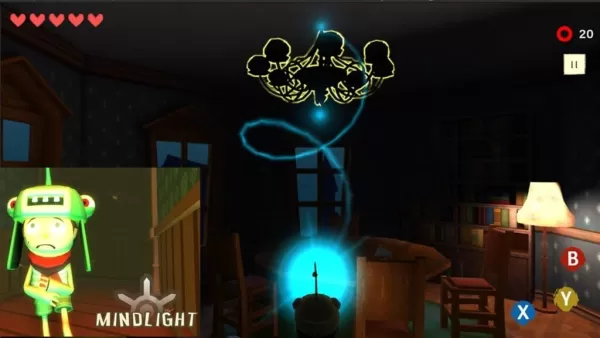
The game uses the NeuroSky MindWave 2 EEG headset to measure real-time brainwave activity—specifically, alpha and theta waves, which are associated with relaxation and focus. As players breathe deeply, concentrate, or simply calm their thoughts, the headset detects these shifts and translates them into gameplay.
- Calm = Light: As your mind settles, the mansion lights up. Shadows recede, pathways appear, and monsters shrink back.
- Anxiety = Darkness: When stress spikes, the environment grows darker and more intense. Creatures emerge, and puzzles become harder to solve.
- Self-Awareness Through Play: Kids learn to recognize their own emotional states—and discover that they can influence their inner world through breathing and mindfulness.
This isn’t just gamification. It’s emotional intelligence training in action, wrapped in a story-driven adventure.
🧠 Science-Backed Results
The research behind MindLight is impressive:
- Multiple randomized controlled trials (RCTs) involving over 1,000 children confirmed significant reductions in anxiety symptoms.
- Participants showed at least a 50% decrease in anxiety levels after consistent play.
- Improvements were sustained over time, suggesting lasting impact.
Dr. Isabela Granic, a renowned psychologist and expert in child development and gaming, has long championed the therapeutic potential of video games. MindLight is a prime example of how play can be a powerful medium for healing.
🎮 Two Play Modes, One Purpose
-
Single Player (Child-Focused)
Designed for kids aged 8–12, this mode guides players through a narrative-rich journey: uncovering family secrets, solving puzzles, and battling emotional shadows—all while learning calming techniques. -
Family Mode (Multiplayer)
Up to five players can join, making it perfect for siblings or family therapy sessions. The game encourages communication, emotional support, and shared mindfulness. Parents can even play alongside their children, modeling healthy coping behaviors.
📱 Where to Play
- Platforms: Google Play Store, Amazon Appstore, Apple App Store, and directly via PlayNice’s website.
- Hardware Required: NeuroSky MindWave 2 EEG headset (sold separately).
- Subscription Plans:
- Individual: For one child.
- Family: For up to five players.
💡 Tip: Many schools and therapists are now integrating MindLight into mental health programs—because it’s not just fun, it’s functional.
🎮 A New Era of Play-Based Therapy
While games like Wuthering Waves captivate with epic storytelling and stunning visuals, MindLight proves that video games can do more than entertain—they can heal.
It’s a beautiful reminder that:
The most powerful adventures aren’t always fought with swords—but with stillness, breath, and courage.
🎧 Pro Tip: Combine gameplay with a short post-session reflection. Ask your child:
- “What did you notice when you felt calm?”
- “How did you calm your mind?”
- “Which moment felt the most peaceful?”
These simple questions turn play into lasting mindfulness practice.
And if you’re exploring Wuthering Waves’ Version 2.3 and first-anniversary updates (which include new characters, story arcs, and community events), consider this:
While one game inspires awe through fantasy, the other helps children find power in peace.
Both are transformative. But in a world full of noise, MindLight might just be the quiet revolution we all need.