
Nintendo recently revealed that the Nintendo Switch 2 will exclusively support expansion via MicroSD Express cards. While this may disappoint users with existing MicroSD collections, the decision aligns with performance needs – MicroSD Express delivers significantly faster speeds.
These cards achieve read/write speeds comparable to the Switch 2's internal UFS (Universal Flash Storage), ensuring games load just as quickly from external media. The trade-off? Standard MicroSD cards won't be compatible.
Comparing Storage Standards
MicroSD technology has evolved through six speed tiers since its 12.5MB/s debut. Current Ultra High Speed (UHS-III) cards reach 312MB/s, but the SD Express standard, introduced five years ago, represents a quantum leap.
The game-changer is the PCIe 3.1 interface – the same technology powering NVMe SSDs. While full-size SD Express cards achieve staggering 3,940MB/s transfers, MicroSD Express variants still deliver impressive 985MB/s speeds (3x faster than conventional MicroSD).
Why Nintendo Mandates MicroSD Express
Though Nintendo hasn't officially explained its decision, performance requirements clearly drive this specification. The Switch 2's upgraded UFS internal storage would be bottlenecked by slower external media. Early benchmarks show dramatic load time improvements – up to 65% faster fast-travel and 3x quicker initial loads (per Digital Foundry and Polygon).
This forward-looking approach also accommodates future storage advancements. While current MicroSD Express cards max out at 985MB/s, upcoming SD 8.0 specification could potentially triple these speeds.
Current MicroSD Express Options
The MicroSD Express market remains limited but will likely expand with the Switch 2 launch. Currently, Lexar's Play Pro series offers 256GB-1TB options (the 1TB priced at $199), while SanDisk only lists a 256GB model.
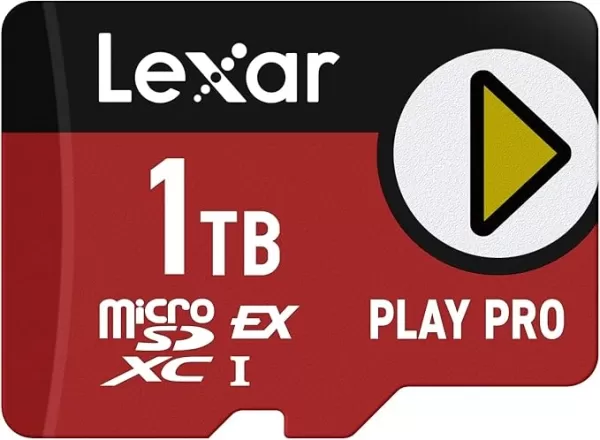
Lexar Play Pro MicroSD Express
Available at Amazon
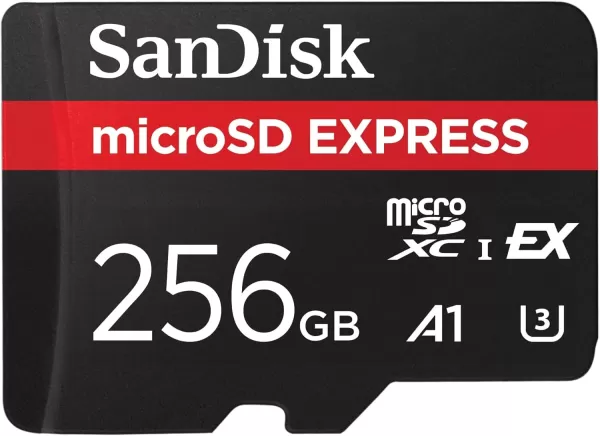
SanDisk MicroSD Express 256GB
Available at Amazon